prokombiznes.pl
B2B platform
A 422-product catalogue in 33 categories with search and structured data for Google.
prokombiznes.pl (opens in a new tab)Commercial delivery · 2026
As the sole developer I led the digital transformation of a multi-line IT company: from a plan approved by the owner, through a multi-tenant architecture and code, to our own server, deployments and a security audit.
Next.js 16 · TypeScript · Payload CMS 3 · PostgreSQL · Docker · Nginx · GitHub Actions · Playwright · Vitest · Lighthouse CI · Django 5.2 LTS · Celery · Redis · Sentry
01 — CONTEXT
PRO-KOM sells business solutions, installations, repair services, software and custom PCs. Each line needed its own website, and the company needed one place to manage them all.
Every business line had a different, outdated website on a different system, with no consistent brand. The company domain ran on an unpatched Joomla install.
Content, products and company data (addresses, phones, opening hours) had to be updated separately everywhere, and staff couldn't do it themselves.
No staging, no automated deployments and no verified backups. Every change went straight to production.
02 — SCOPE
A solo project – from the first document to running production.
A digitalisation plan with timeline, budget and risk analysis, approved by the owner. Each site's scope agreed before starting, shipped before the next one.
A multi-tenant platform in Next.js and Payload CMS, frontend and backend, integrations, forms, catalogue and configurator.
A Dockerised VPS, TLS reverse proxy, staging and production, CI/CD with a deployment gate, encrypted off-site backups.
A security audit against OWASP ASVS, tests and audits before every launch, a visual identity system for 6 business lines.
03 — PRODUCT
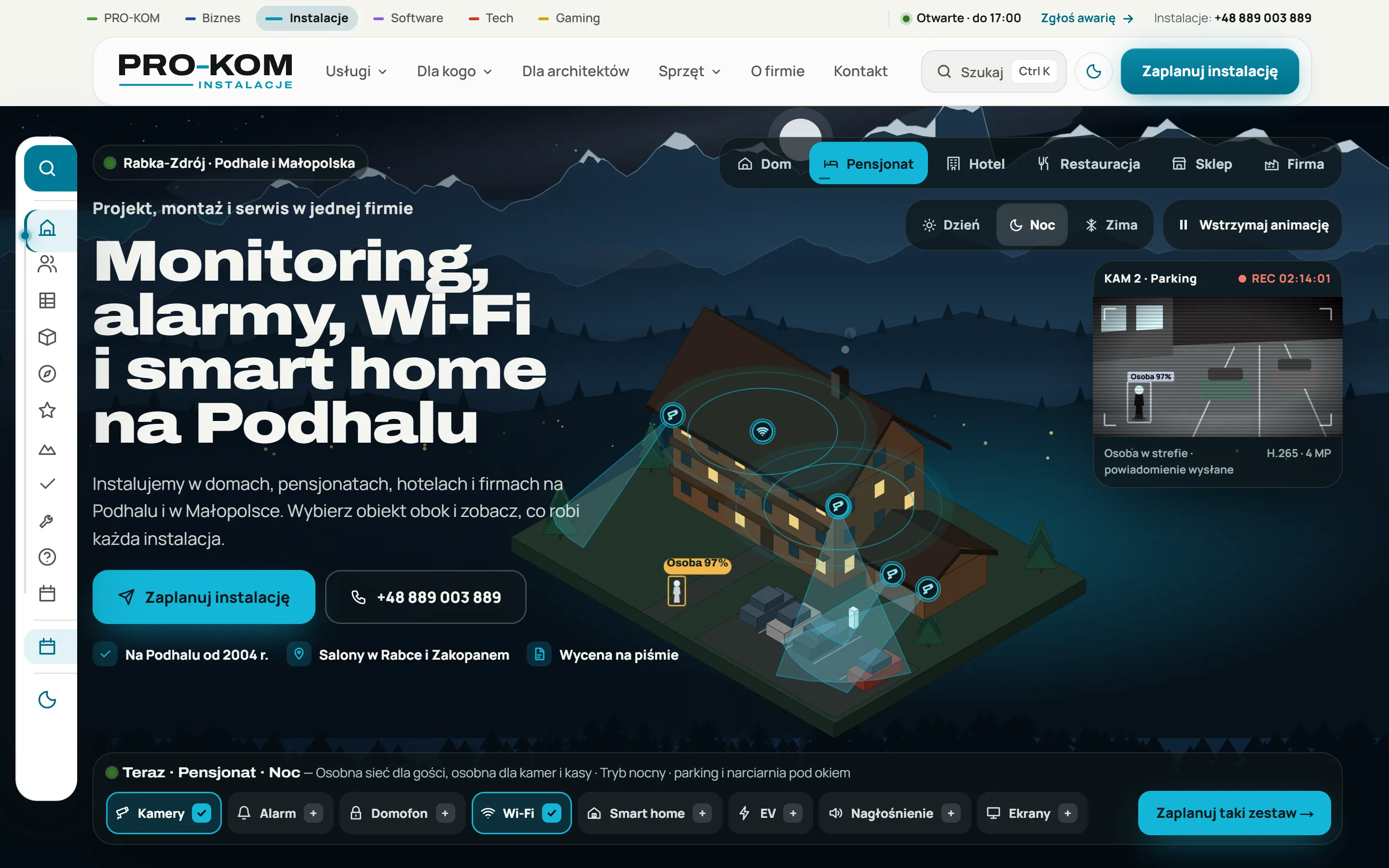
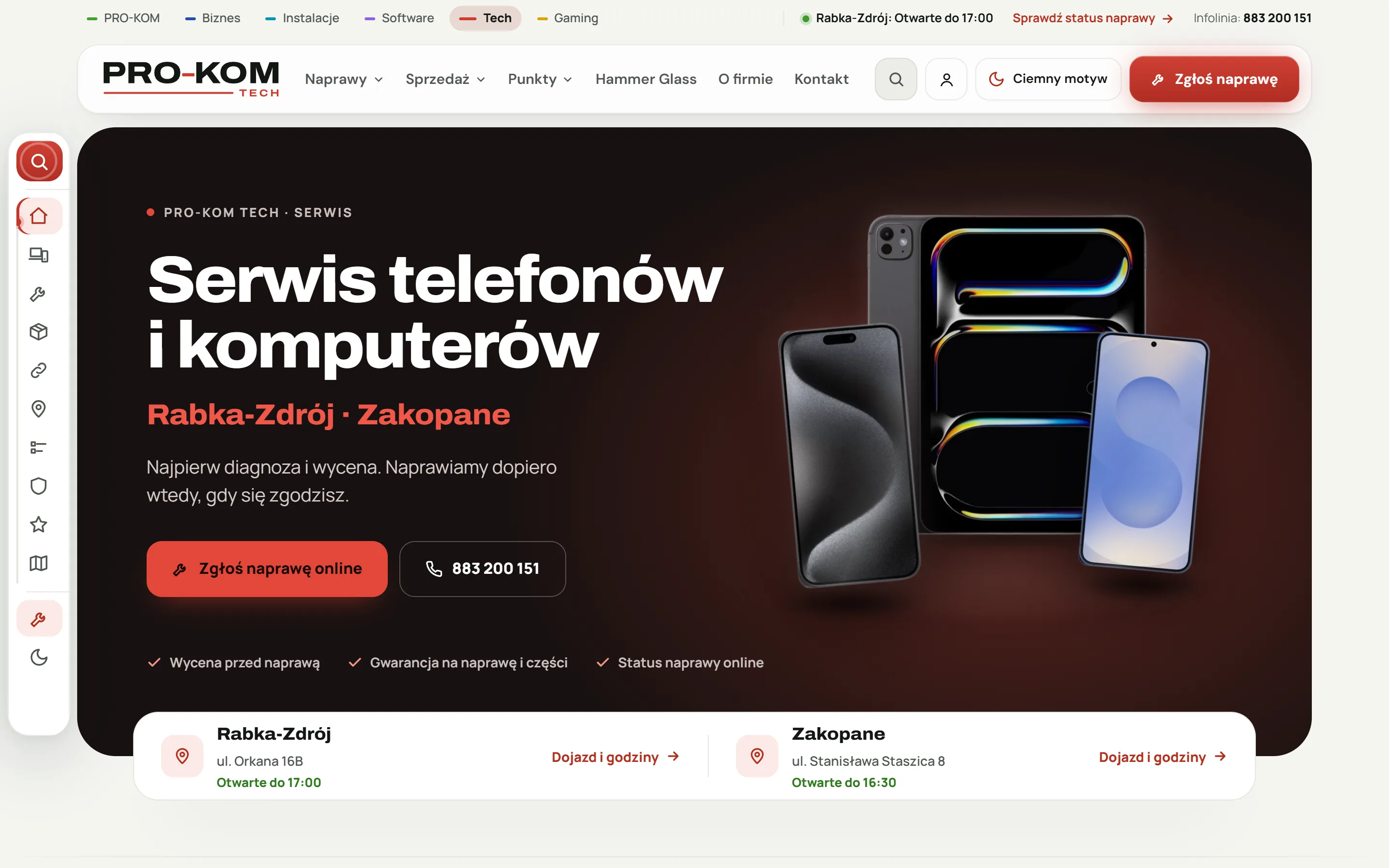
Six production websites – each with its own brand, all on a shared foundation.
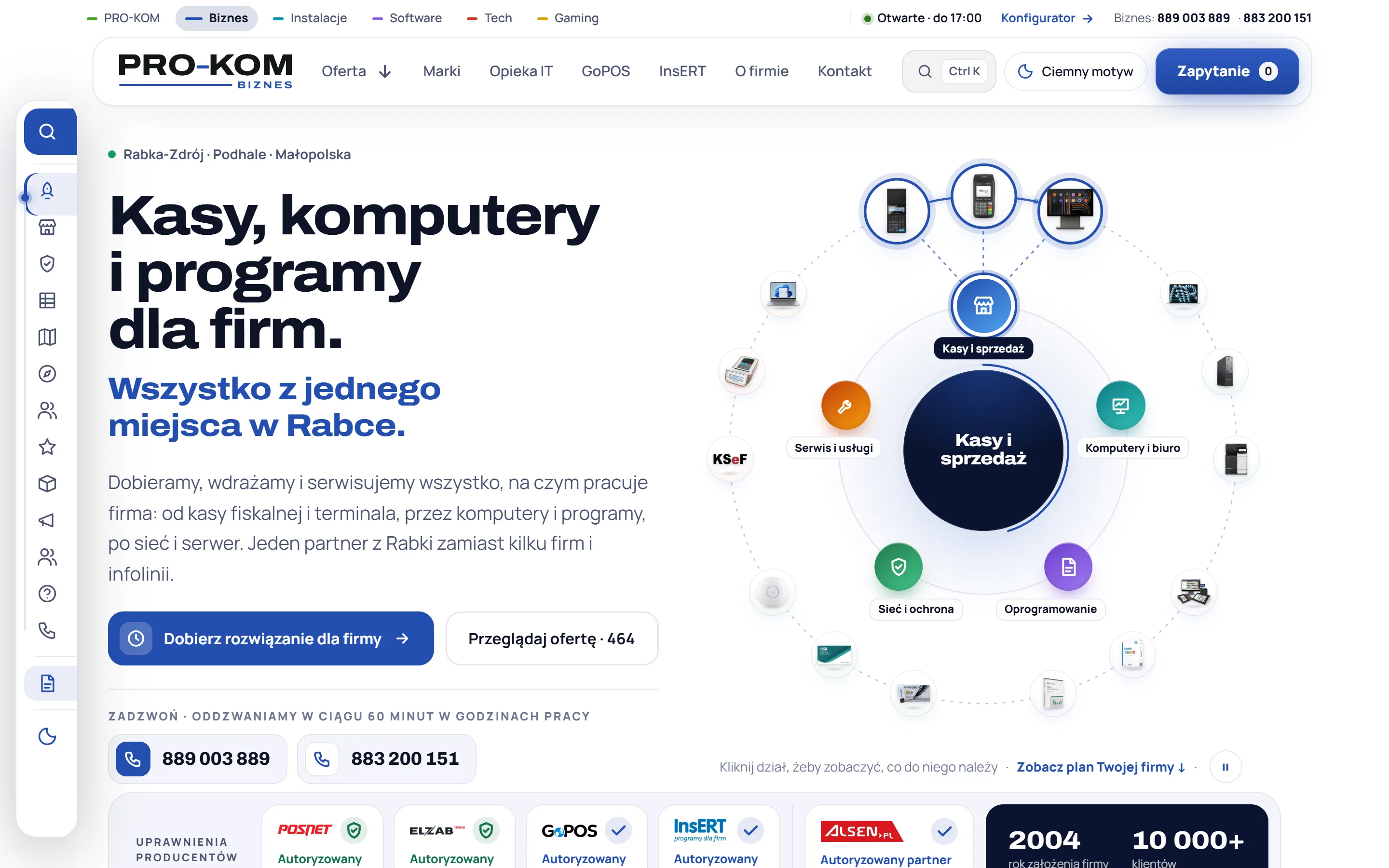
A 422-product catalogue in 33 categories with search and structured data for Google.
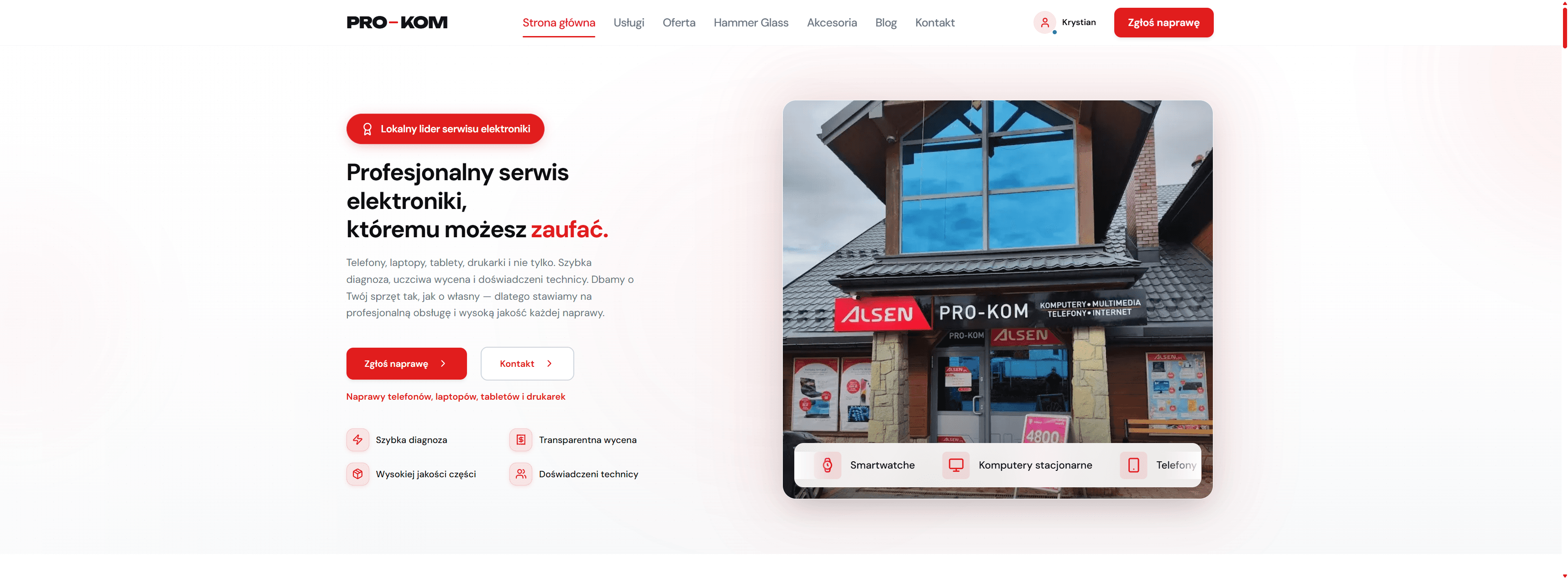
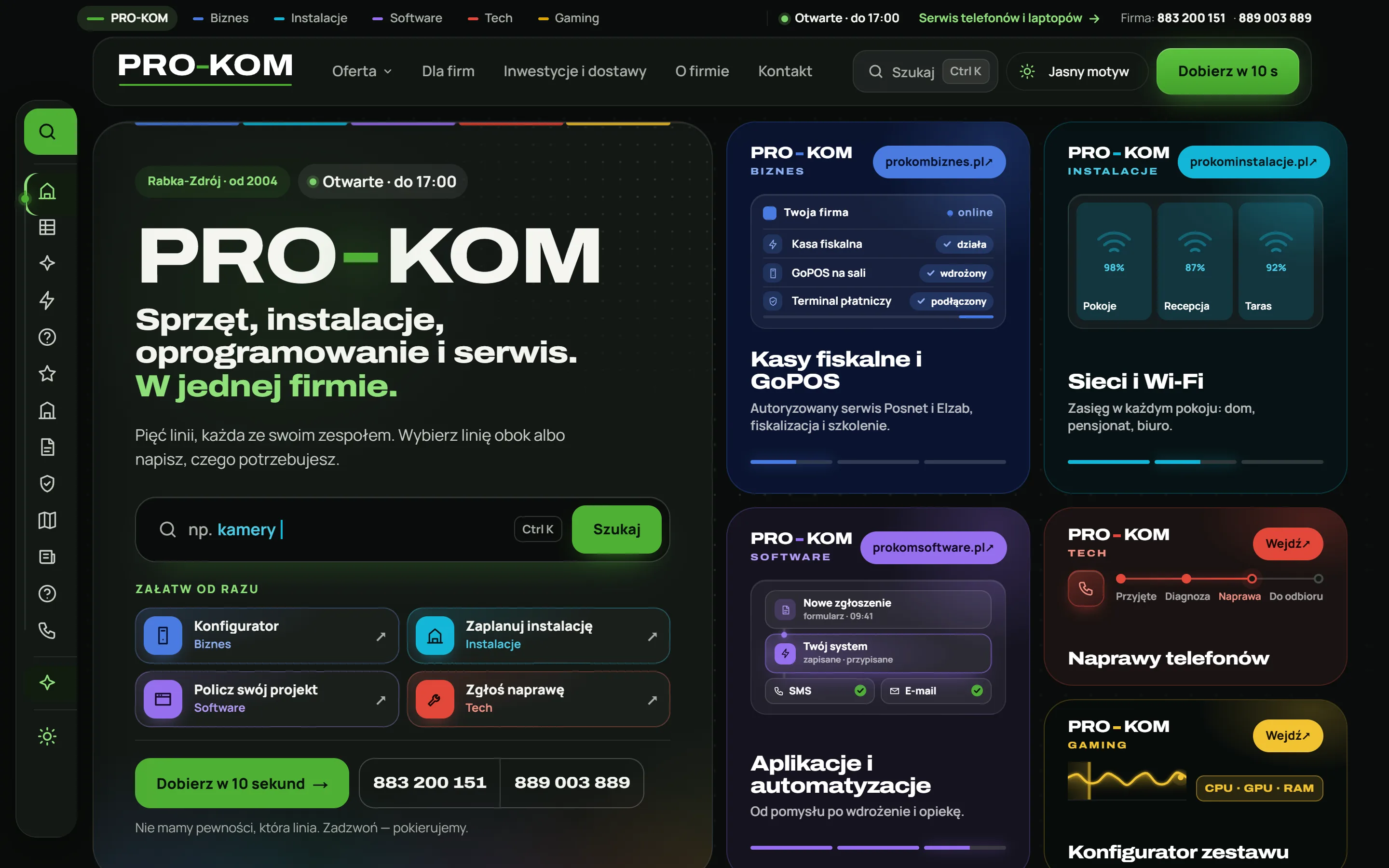
prokombiznes.pl (opens in a new tab)Links every business line; migrated off Joomla with zero email downtime.
pro-kom.eu (opens in a new tab)Live pricing, a margin-safe engine and a PWA admin panel for enquiries.
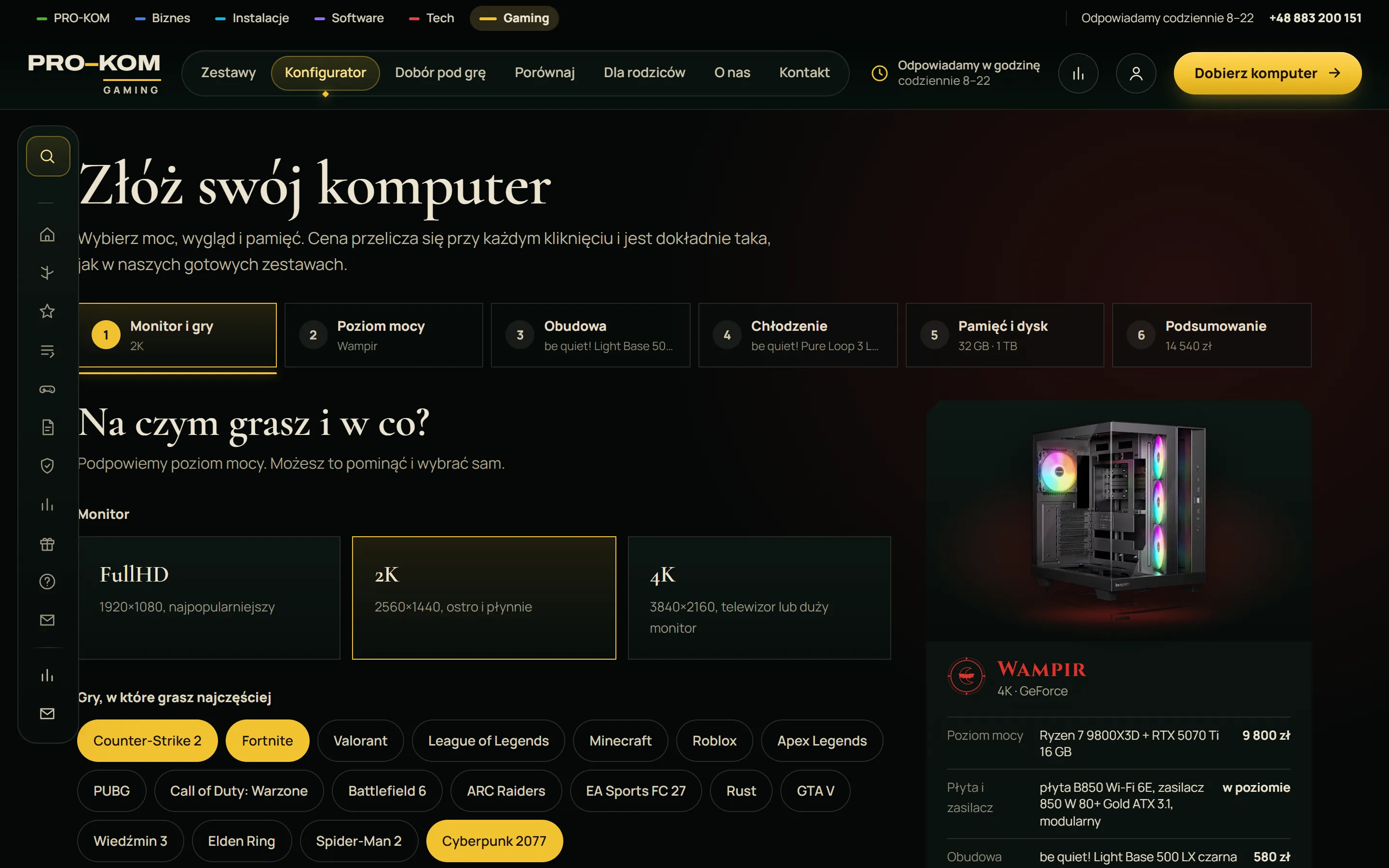
prokomgaming.pl (opens in a new tab)CCTV, networks and smart home; a dedicated page for architects.
prokominstalacje.pl (opens in a new tab)Repair service in Rabka-Zdrój and Zakopane, integrated with the Django repair system.
prokomserwis.pl (opens in a new tab)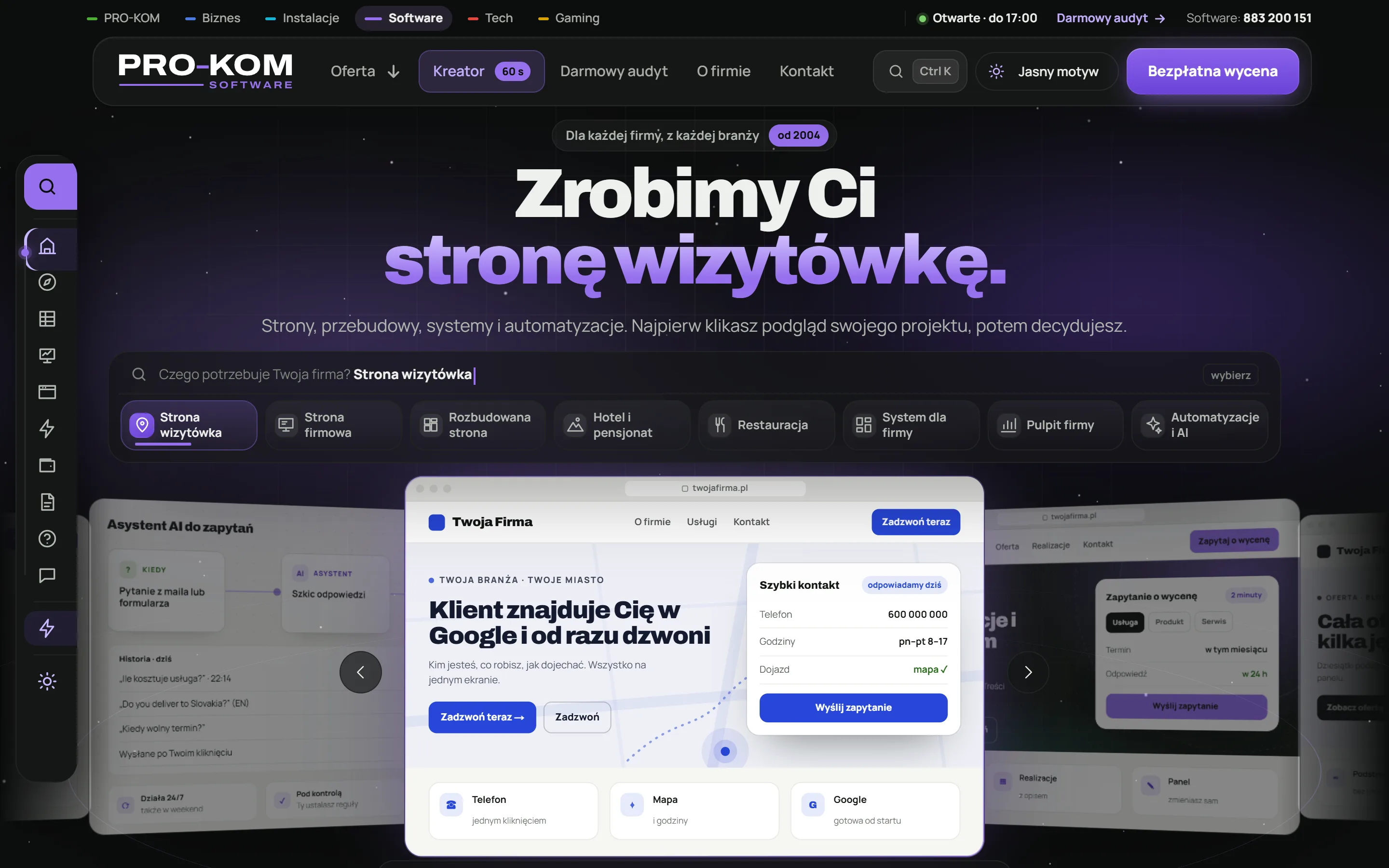
A new service line: 29 priced solutions and a quote wizard.
prokomsoftware.pl (opens in a new tab)1 / 6
6 websites · swipe →
04 — DESIGN
One server, three independent application stacks behind a shared reverse proxy. Each app has its own database, and every change goes through staging.
Six brand domains, each with a TLS certificate.
HTTPS · TLS 1.2/1.3 · HSTS
Shared Nginx: TLS termination, security headers, rate limits, unknown hosts rejected.
Nginx · Rate limiting · CSP
One Next.js + Payload CMS app serves several lines' websites and a shared panel; the brand is resolved from the domain.
Next.js 16 · Payload CMS 3 · Multi-tenant
Separate stacks: the PC configurator (Next.js + Payload) and the repair service with its Django system (Django + DRF, Next.js, Celery).
Django 5.2 · Celery · Redis
A separate PostgreSQL database per app, with no ports exposed.
PostgreSQL · Docker networks
CI builds images, staging deploys automatically, production after approval with a pre-deploy backup and rollback. Daily encrypted off-site backups.
GitHub Actions · Staging · Encrypted backups
Shared components, company data and panel. A fix is made once for every site, and one person can maintain it all.
A TypeScript admin in the same repo and deployment process; staff edit content without a developer.
The configurator and the repair system have different data and release cycles, so they run independently and one failure doesn't affect the rest.
Control over cost and data, a server in Poland, staging and production on one machine, production deploys only from an approved build.
Internet ── HTTPS ──► Nginx (TLS, headers, rate limits, unknown hosts rejected)
                        ├─► Brand platform: Next.js + Payload CMS (multi-tenant, panel)
                        │      └─ PostgreSQL
                        ├─► Gaming: Next.js + Payload CMS
                        │      └─ PostgreSQL
                        └─► Tech: Django + DRF · Next.js · Celery · Redis
                               └─ PostgreSQL
GitHub Actions ─► image ─► staging (auto) ─► production (approval, backup, rollback)
Backups: daily, encrypted, off-site, restore-tested
05 — FEATURES
Sites always read data filtered by brand, unknown domains get a 404, and an editor of one line can't change another's content. The panel lives on its own host only.
422 products in 33 categories, search, product pages with structured data and nearly 600 URLs with zero broken links.
Build prices calculated live from many component combinations. Tests across all 85,134 configurations confirm none drops below the minimum margin.
Competitor price checks via the Claude API: server-side key only, a monthly budget, fetching only from an allowlist of sources, and prices change only after admin approval.
Schema validation with length limits, a bot trap, a signed time token, per-IP limits and GDPR consent stored with the clause version.
Moving the company domain off Joomla: 301 redirects for old URLs and about 25 mailboxes with no interruption.
06 — SECURITY
After launch I ran a full security audit of the infrastructure and all three applications against OWASP ASVS 4.0 (level 1) and OWASP Top 10. Every finding has evidence, a risk rating, a fix and a test.
Server: key-only login, firewall, brute-force protection, automatic updates.
Non-root containers, databases and cache with no exposed ports.
TLS 1.2/1.3, HSTS, security headers, rate limits on login and forms.
Secret scanning and dependency audits in CI and before every commit, CI actions pinned to versions.
Daily encrypted off-site backups with a deletion lock and a monthly restore test.
GDPR: full account anonymisation and data export on request, an incident procedure.
Audit details are confidential – I'm happy to discuss the approach and examples in an interview.
07 — CHALLENGES
Where the project needed its most important decisions.
Challenge
The company domain and about 25 mailboxes lived on old hosting, and email is the main channel to customers. Any outage meant lost enquiries.
Solution
A step-by-step DNS and email cutover, a 301 redirect map for old URLs, checks before and after the switch – no email downtime, search URLs preserved.
Challenge
The configurator prices builds live from many component combinations, while supplier prices change. Business rule: no configuration may drop below the minimum margin.
Solution
Pricing logic extracted into pure functions and verified by tests across all 85,134 possible configurations; price changes only after admin approval.
Challenge
Several business lines share one app and one panel. One brand's content, media and permissions must never leak to, or be changed from, another.
Solution
A brand filter on every query, collection-level permissions, the panel on its own host only, and the API and panel unreachable from site domains – verified in the audit.
08 — OUTCOME
6 websites under one brand instead of scattered sites on different systems.
One panel for content, products and company data across every line.
A new line (business software) launched on the existing foundation instead of building a site from scratch.
An audit, security documentation, staging before every change and backups verified by restore.
09 — LESSONS
An agreed scope and shipping before the next site beat writing code fast.
One well-thought-out architecture saves more work than any later optimisation.
Security has to be verified with evidence, not assumed – the audit found things tests didn't catch.
A backup only exists once you've restored it.
Mobile performance must be measured from day one; visual effects have a cost.
A business owner needs decisions with numbers and options, not technical jargon.
10 — LIVE
Happy to talk through the architecture, decisions and security audit – with code examples in an interview.
Next project
PRO-KOM Serwis System
Repair-management system used at PRO-KOM's service points in Rabka-Zdrój and Zakopane.